 Presscode News



 Presscode News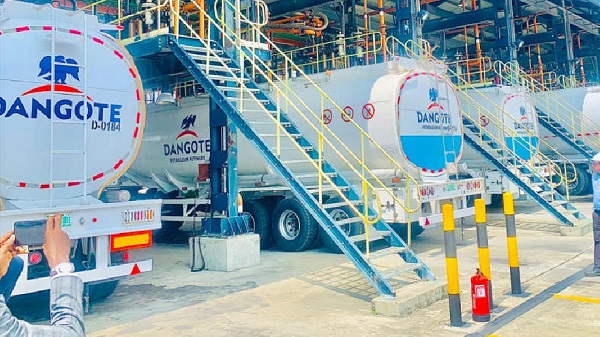
DANGOTE REFINERY’S LOADING SYSTEM DRIVES NIGERIA’S FUEL DISTRIBUTION REVOLUTION
By PRESSCODE NEWS
LAGOS, NIGERIA.
7TH FEBRUARY 2O26
Nigeria’s petroleum landscape is undergoing a fundamental transformation as the Dangote Petroleum Refinery’s advanced distribution infrastructure begins reshaping the nation’s fuel supply dynamics.
The refinery’s 91-bay gantry loading system operates round the clock, with capacity to dispatch 2,900 trucks daily, delivering approximately 50 million litres of petrol and 14 million litres of diesel to the domestic market. These volumes closely align with Nigeria’s daily consumption requirements, reinforcing nationwide supply stability.
Industry analysts highlight that this infrastructure extends beyond mere operational efficiency. The direct truck-loading capability substantially reduces dependence on coastal shipping and associated port charges. According to refinery management, continued reliance on traditional maritime distribution could drive petrol prices towards ₦1,000 per litre owing to compounding logistics expenses.
The gantry system’s rapid throughput accelerates product movement from refining units into national distribution networks, minimising supply disruptions and supporting market availability. This proves particularly crucial within the current deregulated pricing framework, where logistics efficiency directly influences retail costs.
Domestic refining increasingly serves as strategic economic infrastructure. Local production alleviates foreign exchange pressure previously directed towards importing refined petroleum whilst supporting price moderation and energy security. Recent production figures confirm the refinery is already delivering tens of millions of litres daily, establishing itself as a stabilising presence in Nigeria’s downstream sector.
PRESSCODE NEWS INSIGHT
The emergence of gantry-driven distribution marks a structural evolution in Nigeria’s energy economy. Full optimisation could significantly diminish import dependency, stabilise pump prices and enhance Nigeria’s position in global energy markets.
However, sustained price stability remains contingent upon consistent crude supply, exchange rate steadiness and rigorous regulatory oversight. Whilst infrastructure improvements reduce costs, international crude price fluctuations and domestic policy reforms will continue shaping final consumer prices.
For Nigeria, the implication is unmistakable: efficient distribution has transcended logistics to become fundamental to national energy security and economic resilience.
PRESSCODE NEWS
The More You Know Presscodenews.com Presscodenews@gmail.com.